
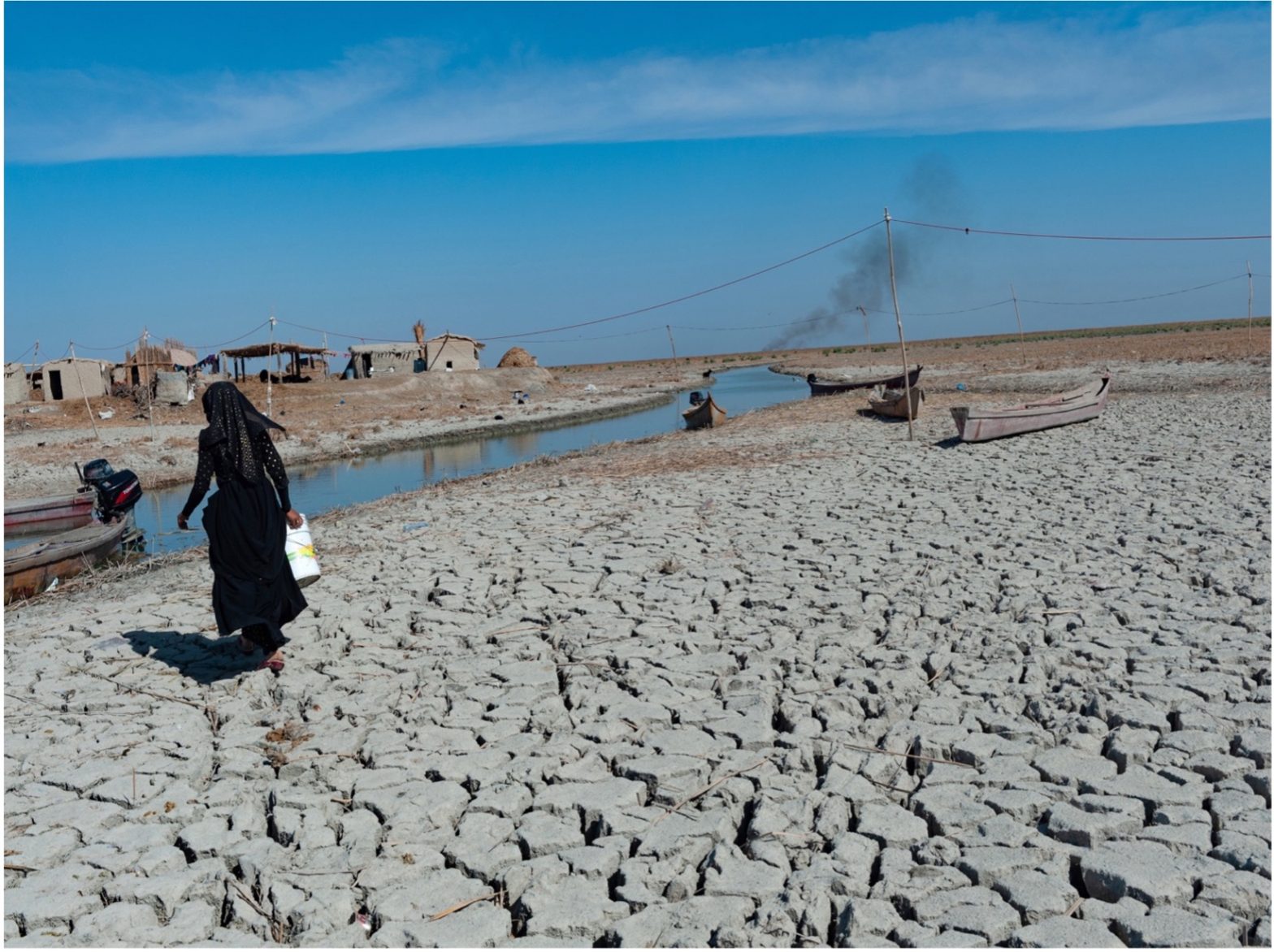
Climate change has created unprecedented changes to environmental patterns across the Arab States region. The social implications of climate change are, importantly, not gender neutral. There is a significant gap in literature on the ways that climate change amplifies gender-based inequalities.
The Issue
When looking at the climate-gender-displacement nexus, it is important to first highlight some of the factors that make women and girls more vulnerable to climate change. In this context, protracted emergencies such as displacement, coupled with climate shocks, often results in severe impacts, with displaced women and girls at higher risk than others. Discriminatory gender norms and practices place women and girls at a disadvantage as they are likely to have diminished decision-making within the household, limited mobility, less access to credit and resources, and are less likely to be engaged in policy formulation or community decision making, widening existing social and economic inequalities.
The Arab States region has been witnessing higher levels of protracted crises over the last decade. Research shows that women and girls make up 50% of any refugee and internally displaced or stateless person, with some groups such as unaccompanied, pregnant, heads of households, elderly and disabled particularly vulnerable.
About the project
Sama Consulting is partnering with MAGENTA to better understand how climate change amplifies and exacerbates gender-based and social inequality, particularly for women experiencing displacement in four countries across the Arab States: Jordan, Lebanon, Iraq and Yemen. This project is commissioned by the UNDP SDG Climate Facility Project.
